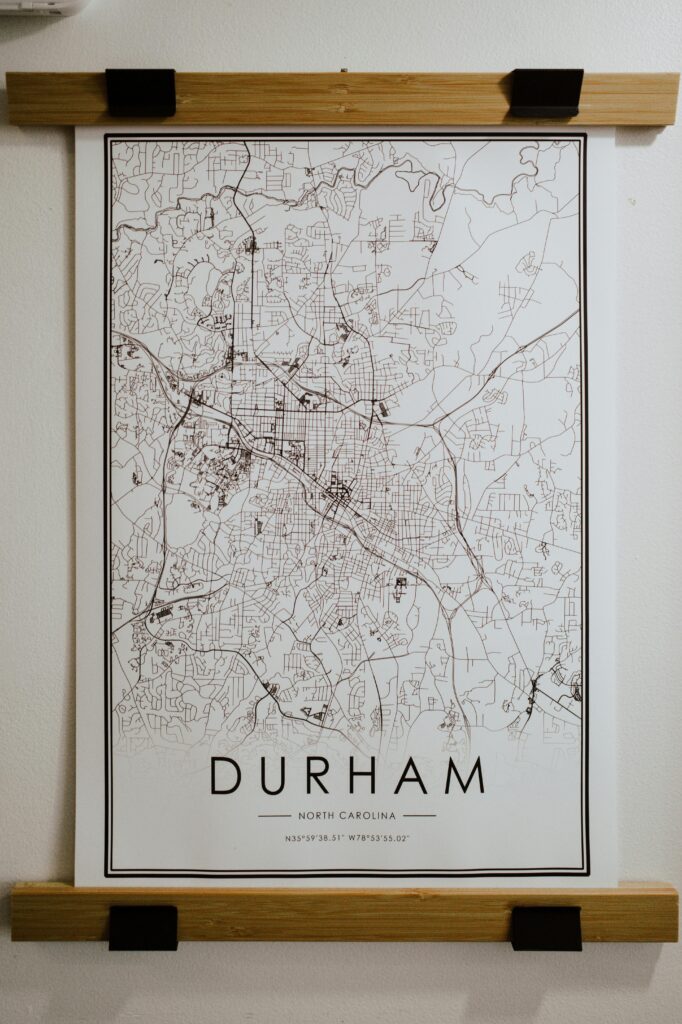
From Burnout to Belonging: How Durham Became Home
Thinking about relocating to the Triangle? Let’s explore it together.
When I first moved to Durham, North Carolina, I was completely burned out. At the time, I was living in the Bay Area. COVID had just hit, life had slowed down dramatically, and for the first time in a long time, everything stopped. While the rest of the world was navigating fear and uncertainty, that pause gave me something unexpected: clarity. It forced me to step back and ask myself tough questions about the life I was living.
And I realized I didn’t want to spend the rest of my life running around California chasing status symbols and exhausting expectations. I didn’t want to work myself to the bone just to drive a Tesla or afford a million-dollar home. What I wanted was peace. I wanted to raise my child in a grounded, loving environment. I wanted friendships rooted in genuine connection rather than convenience or comparison. I longed for community dinners, shared time, and relationships that felt real instead of transactional.
Around that same time in 2021, I watched Black Widow in the theater. In the opening scene, a little girl rides her bike home through a quiet neighborhood, and something inside me clicked. I remember thinking, That’s it. That’s the life I want for my child.
After the movie, I found myself wondering where that scene was filmed. When I learned it had been shot in the South, a spark lit inside me. I started researching cities where Black families were thriving. My search took me to Baltimore, Nashville, Atlanta, and cities across North and South Carolina.
Cities Where Black Families Are Thriving
We were drawn to the South, but not the deep South. My grandmother was from Louisiana, and while I love my roots, I wanted something progressive, education-focused, and future-oriented.
So my then-husband and I decided to take a tour and see these places in person.
Our first stop was Nashville. We loved it. The energy was vibrant, the food was amazing, and the city felt alive. But we quickly realized we were too late to the game. By 2021 and 2022, Nashville’s housing market had exploded. Homes were far beyond what we could afford, and at the time, anything over $500,000 just wasn’t realistic for us. We didn’t want to rent. We wanted to buy and start building generational wealth. As much as we adored Nashville, it wasn’t sustainable for us long term.
Why Nashville Became Unaffordable for Homebuyers
There was another issue, too. Nashville felt geographically isolated. Outside of Memphis, there weren’t many nearby destinations that made weekend trips easy. We wanted flexibility, road trips, adventure, and access to other cities.
So I said, “I really want to see North Carolina.”
I didn’t know much about it at the time, but something told me it might be right. When we arrived in Durham, it felt like home almost instantly.
We stayed in Durham for about a week and then spent a few days in Raleigh. Raleigh was fine, but it didn’t feel like home. Durham did. It reminded me of Oakland, layered, soulful, creative, and community-driven. Later, I learned people even call it the “mini Oakland” of North Carolina, and suddenly it made total sense.
Why Durham Is Called the Mini Oakland of North Carolina
As we began browsing homes online, everything aligned. We could find houses under $400,000. The schools were solid and improving. And most importantly, the people were incredible.
Everywhere we went, conversations happened naturally. At Cocoa Cinnamon, strangers struck up friendly chats. At Pizzeria Toro, someone always had the next restaurant recommendation. At the farmers market, the warmth felt effortless. People were kind, open, and deeply rooted in their city.
Best Coffee Shops in Durham NC 2026
Best Restaurants in Durham NC 2026
Durham Farmers Market Guide 2026
Durham felt preserved in time. Kids rode bikes through neighborhoods. Life moved slower. It felt safe, intentional, and human.
From there, we continued our road trip. We traveled from Durham to Raleigh, then down to Charleston. Charleston was stunning. We saw dolphins in the water, took boat rides, and wandered beautiful streets. But beneath the charm, I felt a heaviness. Knowing its deep ties to slavery and segregation made it hard for me to imagine building a life there. The values of South Carolina just didn’t align with what I wanted for myself or my child.
We also explored Columbia, South Carolina, a college town we hoped might feel right, but it didn’t click. Then we visited Charlotte, which felt too big and too corporate. I couldn’t picture raising children there the way I could in Durham.
What stood out most was how balanced the Triangle felt. Durham, Chapel Hill, and Raleigh each had distinct personalities, yet they flowed together seamlessly. I could imagine exploring them all, living in between, and planting roots.
After that trip, we returned to California knowing we had found something special.
Not long after, we visited family in Philadelphia. While it wasn’t the right place for us, we realized something important. North Carolina was only eight hours away. That distance felt familiar, like driving from the Bay Area to Southern California. Totally manageable.
We made that drive multiple times. We took trains. We tested logistics. Everything felt surprisingly easy.
From North Carolina, we could travel almost anywhere. Charlotte was a short ride away. We could hop on a train to Washington, DC, New York, Philadelphia, or Baltimore. Virginia was close. So were Charleston, Savannah, and Florida. It felt central, connected, and expansive without the chaos of a massive metro area.
And that’s when it hit us: we could live the life we wanted from North Carolina.
That’s how our journey began. What started as burnout became clear. What began as a search turned into home. And that’s how Durham became the place where we planted new roots and began again.
Part Two: How Buying the Wrong House Taught Me Everything About Relocating the Right Way
When we finally decided on Durham, North Carolina, it felt like the hardest part was behind us. We had done the research. We toured cities. We had followed our intuition. Durham stood out in a way no other place had. Confident in that decision, we returned to California feeling hopeful, energized, and ready to begin our next chapter.
[LINK: Why We Chose Durham, North Carolina (Part One)]
Not long after we got home, I found out I was pregnant. By the time I was six months along, reality hit hard. We had three months before our baby arrived, and we were still living in California. We knew we couldn’t stay. We needed stability. We needed a home. We needed to get established fast. So we did what most relocating families do. We met with a lender, completed the approval process, and began searching for a Realtor in North Carolina.
Our lender referred us to an agent based in Raleigh. At the time, it made sense. We weren’t fully committed to one city yet. The Triangle felt similar to the Bay Area. Even if you live in Oakland, you can easily access San Francisco or San Jose. In the same way, Raleigh, Durham, Chapel Hill, Cary, and Apex all blend together on a map. When you’re relocating from across the country, it can feel nearly impossible to know where you truly belong. Although we were most drawn to Durham, we trusted that professional guidance would help us narrow things down. That trust would soon be tested.
During my pregnancy, I developed hyperemesis. I was extremely sick and physically unable to participate in the home search. I couldn’t tour properties. I couldn’t travel. Some days, I could barely function. As a result, we bought our home sight unseen. Our Realtor showed us houses through FaceTime. The process felt rushed and pressured. There was no education, no pacing, and no space to breathe. No one walked us through what buying a home in North Carolina actually involved. No one explained due diligence. No one broke down earnest money. I don’t remember receiving comparable sales. I don’t recall conversations about flood zones, zoning, or land use. Looking back now, as a licensed Realtor myself, that realization still makes my stomach drop.
[LINK: What Is Due Diligence in North Carolina Real Estate?]
[LINK: Understanding Earnest Money vs Due Diligence Fees]
At the time, we didn’t know what we didn’t know. We were first-time buyers in a new state during one of the most chaotic real estate markets in history. In 2021, homes were flying off the market. Competition was fierce. Everything felt urgent. But chaos is exactly when guidance matters most. Instead, the transaction felt like a shotgun approach. Fast. Impersonal. Transactional. Once we closed, we never heard from our agent again. Relocating clients should never be handled that way.
Now that I work with buyers every day, I would never allow someone to relocate across the country without slowing the process down. I would never let a pregnant client purchase a home without fully understanding the neighborhood dynamics, North Carolina–specific laws, property risks and disclosures, and long-term lifestyle implications. In hindsight, what we should have done was simple. We should have waited. We should have had the baby. We should have lived in an Airbnb temporarily. We should have explored neighborhoods in person.
[LINK: Relocating to Durham – Why Renting First Can Save You Thousands]
At the time, there were homes available for around $275,000 in walkable neighborhoods that aligned perfectly with everything I wanted. I drive past one of them almost every day. It sits near a park, a coffee shop, and a true sense of community. Everything I imagined for my daily life was right there. But we didn’t buy that home. We bought acres. Land far outside my comfort zone. Space that felt isolating rather than grounding. I’m from Oakland, where density creates connection and energy. North Carolina is spread out in ways that can feel shocking if you’re not prepared for it.
Suddenly, I was in the country with a newborn. No family nearby. No established friendships. No walkability. No community within reach. I felt scared. And unseen.
What made it harder was realizing that neither my Realtor nor my then-husband truly listened to me. My needs were overshadowed by urgency and practicality. The home reflected his vision, not mine. And because I was pregnant, sick, and vulnerable, my voice was easy to dismiss. A good Realtor doesn’t just work with the loudest voice in the room. A good Realtor sees everyone. They ask what both partners want. They acknowledge lifestyle differences. They understand that a stay-at-home parent experiences a home very differently than someone who leaves for work each day. No one asked what my daily life would look like. No one asked if walkability mattered, if community mattered, or if proximity mattered. Nothing on my original wish list made it into that home. Not the location. Not the neighborhood. Not the lifestyle.
For three years, I avoided being home because it never felt like mine. That experience deeply impacted my mental health, my sense of safety, and ultimately my marriage. That house didn’t cause my divorce, but it exposed everything that wasn’t aligned. And yet, through all of it, one truth never changed. Durham was still for me. Even when I felt lost. Even when I felt isolated. Even when the house was wrong. The city itself still felt right.
That experience became the foundation of everything I do today. Discoverable City was born from confusion, regret, and the realization that relocation often fails people when they’re treated like transactions instead of humans. I became a Realtor because I never want someone to feel the way I did. I never want a buyer to feel rushed. I never want a relocating family to feel uneducated. I never want a pregnant mother to feel invisible.
Relocation isn’t just about buying a house. It’s about choosing a life.
When you’re moving to a new city, especially with children, your Realtor should be your guide, your advocate, and your protector. Not someone who hands you a contract and disappears. Today, I helped people slow down. I help them explore neighborhoods intentionally. I help them understand North Carolina laws, market nuances, and lifestyle realities before making one of the biggest decisions of their lives.
Because the right city can change everything. But only if you’re guided with care.
Durham was always my place. I just had to learn the hard way how to find home within it. And now, I make sure no one else has to.
How I Help Clients Relocate to Durham the Right Way
After everything we went through, you might think I would have questioned our decision to move to Durham. But I didn’t. Even when the house was wrong. Even when I felt isolated. Even when my life looked nothing like I imagined. Durham itself still felt right. That distinction mattered more than I realized at the time.
For a long time, I blamed the move. I told myself that relocating to North Carolina had been a mistake. Maybe I had romanticized the South. Maybe I had uprooted my life for something that didn’t actually exist. But slowly, as I began to rebuild my sense of stability, I realized something important. The city wasn’t the problem. The process was. Durham had everything I originally fell in love with: creativity, culture, diversity, history, community, and warmth. What was missing wasn’t the city. It was an alignment between where I lived and how I lived. That realization changed everything.
[LINK: Part One – Why I Chose Durham, North Carolina]
Once my life began to settle, I started exploring Durham intentionally. Not as a frantic buyer. Not as someone under pressure. But as a resident learning her city. I visited different neighborhoods. I paid attention to how each area felt at different times of day. I noticed where people gathered, where kids played, where neighbors walked their dogs or lingered on porches. I learned quickly that Durham is not one experience. It’s many. Downtown Durham feels energetic, urban, and alive. Trinity Park feels historic, walkable, and deeply rooted. Hope Valley feels quiet, established, and spacious. East Durham feels raw, evolving, and community-driven. Each neighborhood offers a completely different lifestyle, even though they’re minutes apart. That nuance is something you can’t understand from a listing or a FaceTime showing. You have to live it.
Link to Quiz:
One of the biggest lessons I learned is that relocating to Durham, North Carolina, isn’t about choosing a city. It’s about choosing a lifestyle. Two homes with the same price tag can offer completely different daily realities depending on walkability, proximity to downtown, access to parks and schools, commute patterns, and community energy. When people tell me they want to live in Durham, my first question is always the same: what does your ideal day look like? Because Durham can support many versions of life, but not all in the same place.
[LINK: Durham vs Raleigh vs Chapel Hill Comparison Guide]
For a long time, home felt like something I endured rather than enjoyed. That experience stayed with me. It taught me how deeply our environment affects our mental health, especially for parents, caregivers, and people navigating major life transitions. When your home doesn’t support your daily rhythm, everything feels harder. You leave more often. You feel disconnected. You struggle to rest. That understanding is now central to how I work with buyers. Choosing the right home isn’t just about square footage or resale value. It’s about how your life unfolds inside it.
I didn’t get my real estate license because I loved contracts or negotiations. I got licensed because I couldn’t stop thinking about how different my experience could have been with the right guidance. I already knew what a good agent looked like. I had seen it in California while helping my mom buy and sell her home and while supporting my siblings through their own purchases. The contrast between those experiences and my relocation to North Carolina was impossible to ignore. I realized I didn’t just want to help people buy homes. I wanted to protect people during one of the most vulnerable seasons of their lives, especially those relocating from out of state, especially families with children, and especially women whose voices are often minimized during major financial decisions.
Discoverable City wasn’t created as a brand strategy. It was created out of necessity. I kept meeting people who were overwhelmed by relocation. People confused by North Carolina’s real estate laws. People who didn’t understand due diligence, earnest money, or why the process felt so different from the state they were coming from. Most of all, I met people trying to make fast decisions without truly understanding the neighborhoods they were choosing. That’s when I knew something was missing. Relocation doesn’t need more listings. It needs context. Discoverable City was built to slow the process down and give people clarity before they ever write an offer.
[LINK: What Is Due Diligence in North Carolina Real Estate?]
[LINK: Earnest Money vs Due Diligence Explained]
Today, my approach looks very different from the one I experienced. I help clients understand North Carolina–specific buying laws, compare neighborhoods based on lifestyle rather than hype, learn how due diligence actually works, explore walkability and commute patterns, and visit intentionally instead of rushing. Sometimes that means advising people not to buy right away. Sometimes it means renting first. Sometimes it means realizing that Raleigh or Chapel Hill fits better than Durham. And sometimes it confirms that Durham truly is home. The goal isn’t speed. The goal is confidence.
[LINK: Relocating to Durham NC Step-by-Step Guide]
If you’re considering relocating to Durham or anywhere in the Triangle, here’s what I wish someone had told me: you don’t need to rush. You don’t need to buy it immediately. You don’t need to settle just because inventory feels tight. You need information. You need time. You need someone who understands that you’re not just moving houses. You’re rebuilding a life. A good Realtor won’t pressure you to choose quickly. They’ll help you choose wisely.
Despite everything, Durham never stopped feeling like my place. It’s a city that values creativity, holds history honestly, and makes space for growth and contradiction. Durham is layered. It’s imperfect. It’s evolving. And so am I. What began as a painful relocation experience became the very thing that clarified my purpose.
Today, when I help someone relocate to Durham, I don’t start with listings. I start with questions. How do you want your mornings to feel? Do you want to walk or drive? Do you want quiet or energy? Do you want space or connection? Because when those answers are clear, the right neighborhood becomes obvious. Home should support your life, not complicate it.
Looking back, I don’t regret moving to Durham. I regret being rushed. I regret not being educated. I regret not being guided with care. But those experiences shaped everything that came next. They shaped my business. They shaped my advocacy. They shaped Discover Bull City. Durham was always my place. I just had to learn, slowly and imperfectly, how to find home within it. And now, I help others do the same.